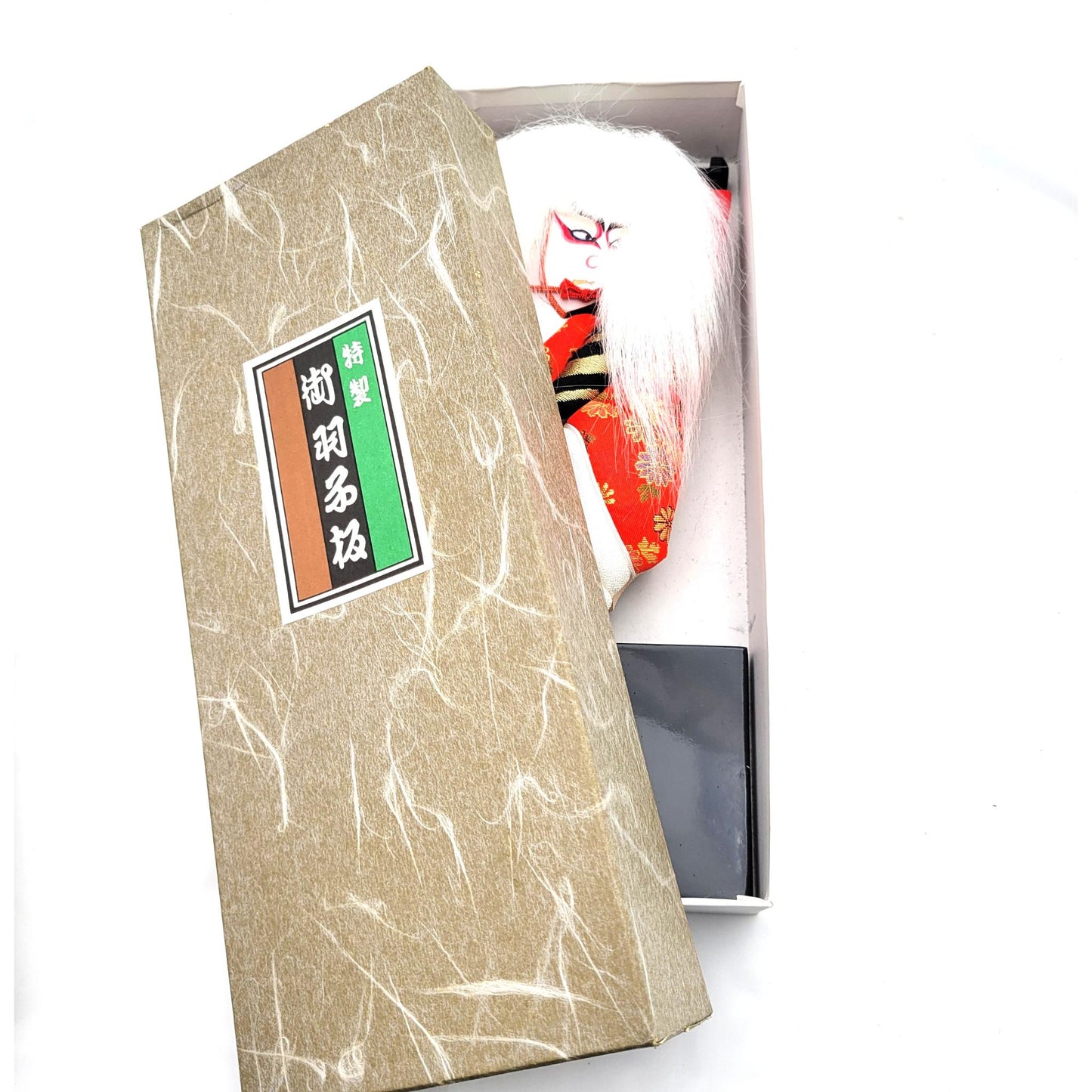
8Hagoita (traditional Japanese racket)
The hagoita is a traditional Japanese racket, used for the game of hanetsuki , played mainly during New Year celebrations in Japan.
It is traditionally decorated with colorful patterns depicting characters, flowers, or lucky symbols.
In Japan, the hagoita is considered a protective talisman, believed to ward off evil spirits and bring luck and health.
Today, it is also appreciated as a decorative object and cultural souvenir.
Yaegaki (Eight sacred enclosures/barriers)
Yaegaki refers to sacred enclosures or barriers arranged in several layers, often associated with Shinto shrines.
They symbolize protection, purity and the delimitation of a sacred space.
In decorative objects and traditional Japanese art, the yaegaki motif represents peace, security, and protection from evil.
Kagami-jishi (Lion in the mirror)
The kagami-jishi is a traditional Japanese motif depicting a sacred lion associated with a mirror, a symbol of truth and purity.
Originating from kabuki theatre and Japanese beliefs, the lion is considered a powerful guardian, protecting against evil spirits and bringing strength and prosperity.
The kagami-jishi is often used as a decorative motif or good luck charm, expressing nobility, protection, and vitality.
Dimensions of the hagoita
-
Upper part: 24 cm × 10 cm × 3 cm
-
Lower part (sleeve): 24 cm × 2.5 cm × 1.5 cm
-
Dimensions when placed on its stand
- 25 cm × 8 cm × 11 cm